
India successfully facilitated a significant diplomatic meeting between Iranian President Masoud Pezeshkian and UAE Crown Prince Sheikh Khaled bin Mohamed bin Zayed Al Nahyan on the sidelines of the BRICS Summit in New Delhi. This interaction, a diplomatic breakthrough given ongoing West Asia conflicts, occurred as BRICS adopted a declaration urging restraint and protection of civilians in the region, highlighting the bloc's commitment to peace and stability.

Nepal's Hindu groups have sought an all-party discussion on restoring Hindu-nation status within three months.

Prime Minister Narendra Modi cautioned against the 'weaponisation' of technology and critical minerals at the BRICS summit, advocating for cooperation to foster shared prosperity. Concurrently, Chinese President Xi Jinping announced plans for an open-source AI ecosystem for BRICS nations, positioning Beijing as a key technology partner amid global AI competition.

Chinese Foreign Minister Wang Yi stated that President Xi Jinping and Prime Minister Narendra Modi reached a crucial consensus during the BRICS summit, agreeing that China and India should be partners, not rivals. The leaders pledged to maintain peace and tranquility in border areas, deepen cooperation, and support each other in multilateral forums, aiming to strengthen the Global South and promote a multipolar world order.

Piyush Goyal on Friday rejected reports suggesting that India is planning to hold off trade deal with the United States for several months.

The 2026 FIFA World Cup, co-hosted by the United States, Mexico, and Canada, is set to be football's largest tournament but will unfold against a backdrop of significant geopolitical tensions, including conflicts, strained alliances, and complex immigration policies, challenging its traditional role as a symbol of global unity.

This article details the quarter-century journey of BRICS, from its inception as an economic acronym by a Goldman Sachs economist to its current status as an expanded eleven-member international bloc. It highlights its growth, key historical moments, and the significance of its upcoming summit, particularly with Iran's renewed importance in discussions.

India and the United States are committed to finalising an interim trade agreement, despite recent challenges including the US imposing a blanket 10 per cent surcharge and India's decision to wait for a new global tariff architecture. The US Trade Representative's annual report highlights India's maintained high import tariffs and various non-tariff barriers across several sectors.

'They talked bad about our leaders. They said India was a dead economy. They were not sensitive to the Indian psyche.'
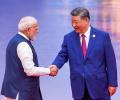
India's dual pursuit of a robust strategic partnership with Washington and a pragmatic, tension-management policy with Beijing represents the essence of modern multi-alignment. By embracing economic pragmatism, learning to compartmentalize political differences, and engaging in continuous dialogue, India can secure its borders, grow its economy, and contribute to a stable, multipolar Asian century, points out Ambassador Rajasekhar.

Congress MLA Ramya Haridas was involved in a scuffle with local party workers in Chirayinkeezhu, Thiruvananthapuram, leading to injuries and police cases. Both Haridas and the party workers, including district panchayat member Sajith Muttambalam and leader Sajad, have filed complaints, each presenting a different account of the incident which reportedly stemmed from a dispute over a WhatsApp post and the role of Haridas' staff member.

Any military response to a cross-border terror attack from Pakistan will have to take into account the new alignments beginning to take shape in the region, points out former foreign secretary Shyam Saran.
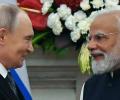
United States representative Sydney Kamlager-Dove while talking about the famous car selfie of Prime Minister Narendra Modi with Russian President Vladimir Putin said that it spoke a thousand words.

As Tehran and Washington continue with their engagements following the signing of the MoU earlier this month, sources have told Al Arabiya that the two are set to hold the next round of negotiations in Switzerland on June 28 and 29.

It is plain to see that the US senate bill's real objective is to derail India's time-tested strategic partnership with Russia, points out Ambassador M K Bhadrakumar.

Japan is deepening its defence relationship with India while simultaneously expanding its economic, infrastructure and security engagement with countries around India -- particularly Bangladesh. The result is an emerging Japanese conception of South Asia in which India remains the strategic anchor, but the geography surrounding India is becoming increasingly important, points out Varun Arya.
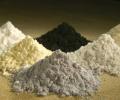
A new study reveals that despite China's significant control over global rare earth mining and processing, its dominance has a critical weakness: the US and Japan hold the majority of core patents for advanced rare earth functional material technologies. This technological gap means China lags in higher-value applications, impacting its strategic advantage in the industry.
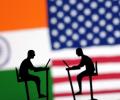
The US said India will lower tariffs on a "vast array" of American industrial and agricultural goods, such as "fruits, vegetables", to zero per cent under the trade deal announced by President Donald Trump.

US Central Command (CENTCOM) forces conducted additional strikes against multiple targets in Iran, on Saturday (local time), at the commander in chief, US President Donald Trump's direction.

Talks on the proposed trade deal between India and the United States will resume after the year-end holidays, coinciding with Sergio Gor -- a close aide of American President Donald Trump -- taking charge as the US Ambassador to India in early January, according to a person privy to the development.
David Perdue said in a post on X that the US-India relationship delivers real results through close cooperation in diverse areas, including defence, energy and through Quad engagement.

Kwatra termed India's successful launch of an American communication satellite on Wednesday as a 'very important and big day' for partnership between Washington and New Delhi, saying it caps a series of achievements in 2025 in bilateral space cooperation between the countries.
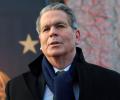
In the wake of the FTA between India and the European Union, the United States has described the Europeans as 'very disappointing', saying they were unwilling to join Washington, DC in putting tariffs on New Delhi for its purchases of Russian oil because of this trade deal.
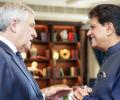
'I don't think we should ever negotiate with deadlines or hard stops because we tend to make mistakes then.'

US President Donald Trump lauded Prime Minister Narendra Modi's 'calm, cool, killer' persona at the G7 leaders' lunch in France, underscoring the deeply strategic relationship and formidable diplomatic skills of the Indian leader ahead of their crucial bilateral meeting.

Indian-American lawmakers are encouraging the diaspora to actively participate in US politics and run for public office at all levels. This call comes amidst increasing incidents of anti-India and anti-Hindu hate, with leaders emphasising that political representation is crucial to address community concerns and ensure their voices are heard.

In her address to the nation on the eve of the country's 80th Independence Day, the president stressed that just as government and society remain united to ensure national security, everyone must contribute through joint and concerted efforts to safeguard the present and future of students.

For the foreseeable future, the most likely outcome remains continuation of the status quo. Taiwan will remain self-governing without formally declaring independence, while China continues to apply sustained pressure short of war, predict Krishnan Srinivasan and Manoj Mohanka.

'A deal will only be possible if India stops buying Russian oil -- but even then, New Delhi must not compromise its core red lines.'

Commerce and Industry Minister Piyush Goyal announced that an interim trade agreement between India and the US is likely to be signed in March and operationalised in April, with chief negotiators meeting in Washington to finalize the details.

US President Donald Trump and Chinese President Xi Jinping began a crucial two-day summit in Beijing on Thursday, with both leaders signalling a desire to stabilise relations between the world's two biggest economies despite deep disagreements on trade, Taiwan, technology and security issues.

India significantly increased its crude oil imports from Russia and the United Arab Emirates in June, securing supplies as the Strait of Hormuz began to reopen, with Russian barrels remaining attractive due to discounts and UAE supplies offsetting earlier uncertainties.

World Cup 2026 is on track to become the biggest betting event in history, with global wagers expected to exceed $50 billion as sportsbooks report record-breaking activity driven by the expanded tournament format and growing legal gambling markets.
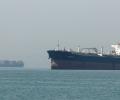
As tensions in the Middle East approach a critical juncture, reports have surfaced regarding a draft memorandum of understanding between the United States and Iran aimed at de-escalating the ongoing conflict, Iranian state media reported on Wednesday.

Iran has denied agreeing to participate in a second round of peace talks, contradicting claims made by the United States. The denial comes as tensions remain high in West Asia, with a ceasefire window nearing its end.
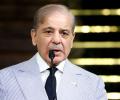
Pakistan's Prime Minister Shehbaz Sharif on Thursday thanked United States President Donald Trump for the 'historic' trade agreement reached between Islamabad and Washington, and expressed hope that it would expand cooperation between the two nations.

India has strongly condemned Pakistan's military airstrikes against Afghanistan, citing significant civilian casualties, and criticised its 'trade and transit terrorism' against Afghan traders, calling these actions blatant violations of international law and UN norms.

Greer said that India has taken down some digital services taxes and is moving tariffs down.

The remarkable rise of smallcaps reflects the emergence of a broad set of specialised businesses operating in industries where the sectoral tailwinds remain considerably stronger than macroeconomic headwinds, points out Debashis Basu.

Lutnick said that these countries have to understand that if "you want to sell to the US consumers, you've got to play ball with the President of the United States."
